Interior vs Exterior Basement Waterproofing: Which Option Is Better?
Reading time: 12 minutes
Water in your basement is more than an inconvenience — it’s a slow-moving threat to your home’s structural integrity, air quality, and resale value. If you’ve ever walked downstairs to find a damp smell, puddles on the floor, or white mineral deposits creeping up your walls, you already know the anxiety that follows. The big question most homeowners face isn’t whether to waterproof their basement — it’s how.
Interior vs. exterior basement waterproofing: two fundamentally different philosophies, two very different price tags, and two very different outcomes depending on your specific situation. Let’s cut through the contractor jargon and give you the straight talk you need to make a confident, cost-effective decision.
Table of Contents
- Why Basement Waterproofing Matters More Than Ever in 2026
- Exterior Waterproofing: The Comprehensive Approach
- Interior Waterproofing: The Strategic Management Solution
- Head-to-Head Comparison
- Cost vs. Effectiveness Visualization
- Real-World Scenarios: Two Homeowners, Two Solutions
- Common Challenges and How to Overcome Them
- Frequently Asked Questions
- Your Waterproofing Roadmap: Next Steps
Why Basement Waterproofing Matters More Than Ever in 2026
The conversation around basement waterproofing has intensified in recent years — and not without reason. According to the National Association of Home Builders (NAHB), approximately 60% of U.S. homes with basements experience some form of water intrusion. With increasingly unpredictable weather patterns in 2026 — record rainfall events in the Midwest, prolonged freeze-thaw cycles in the Northeast, and saturated soil conditions across the Pacific Northwest — basement water damage has become a top-three concern for homeowners across North America.
The financial stakes are significant. The Insurance Information Institute reported in 2025 that water damage and freezing account for nearly 29% of all homeowners insurance claims, with the average claim hovering around $12,000. Worse, many basement water issues are classified as “gradual damage” and are explicitly excluded from standard homeowners policies — meaning you’re often paying out of pocket.
Beyond the dollars, there’s a health dimension. Damp basements are incubators for mold and mildew. The EPA notes that mold can begin developing within 24–48 hours of moisture exposure, and certain mold varieties — like black mold (Stachybotrys chartarum) — present serious respiratory risks, particularly for children and elderly residents.
So the stakes are high. Your choice between interior and exterior waterproofing isn’t just a home improvement decision — it’s a long-term investment in safety, health, and home value.
Exterior Waterproofing: The Comprehensive Approach
Exterior waterproofing is exactly what it sounds like: addressing water problems at their source — outside your home, before water ever reaches your foundation walls.
How Exterior Waterproofing Works
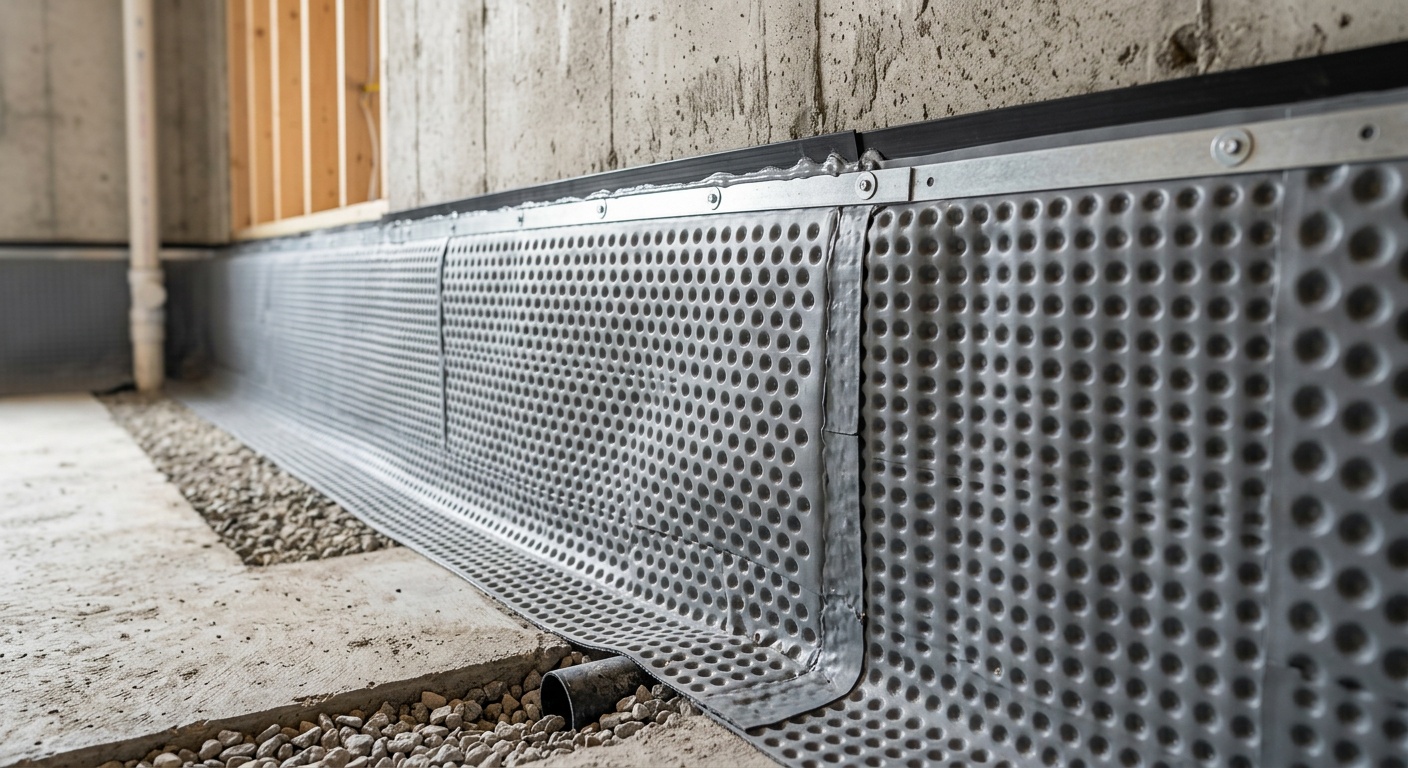
The process typically involves excavating the soil around your home’s perimeter down to the foundation footing — sometimes 8 to 10 feet deep. Contractors then apply a waterproof membrane or coating (typically a polymer-modified bitumen or rubber-based product) directly to the exterior foundation wall. A drainage board or dimple mat is often installed over the membrane to direct water downward. At the base, a perforated drain tile system (French drain) channels water away from the foundation. Finally, the soil is backfilled with gravel and topsoil graded to slope away from the home.
Modern exterior systems in 2026 frequently incorporate crystalline waterproofing compounds — advanced materials that chemically react with concrete to form insoluble crystals within the pores and capillaries of the foundation wall, creating a self-sealing barrier that actually improves with moisture exposure over time.
The Advantages of Going Outside
- Addresses the root cause: Water is stopped before it contacts the foundation, offering true prevention rather than management.
- Protects structural integrity: Eliminates hydrostatic pressure against foundation walls, reducing risk of cracking and bowing.
- Long-term durability: High-quality exterior membranes carry warranties of 15–25 years, with some crystalline systems rated for the life of the structure.
- Preserves finished basement space: No interior disruption means your finished basement remains intact.
- Adds resale value: Buyers and home inspectors recognize exterior waterproofing as a premium, whole-home solution.
The Drawbacks You Can’t Ignore
- Cost: Exterior waterproofing is significantly more expensive — typically ranging from $15,000 to $30,000+ for an average-sized home in 2026, depending on depth, soil conditions, and accessibility.
- Disruption: Excavation is a major undertaking. Landscaping, patios, decks, fences, and utility lines can complicate or prevent excavation entirely.
- Weather dependency: Work must be performed in dry conditions, limiting scheduling flexibility.
- Time-intensive: A full exterior waterproofing project can take 3–7 days for an average home.
Pro Tip: If your home has a deck, addition, or underground utility running close to the foundation, always get a utility locator survey before agreeing to exterior excavation. Hidden obstacles can dramatically increase costs mid-project.
Interior Waterproofing: The Strategic Management Solution
Interior waterproofing doesn’t stop water from entering — it controls and redirects water that does enter, preventing it from accumulating or causing damage. Think of it less as a wall and more as a drainage network that keeps your basement dry by managing the inevitable.
How Interior Waterproofing Works
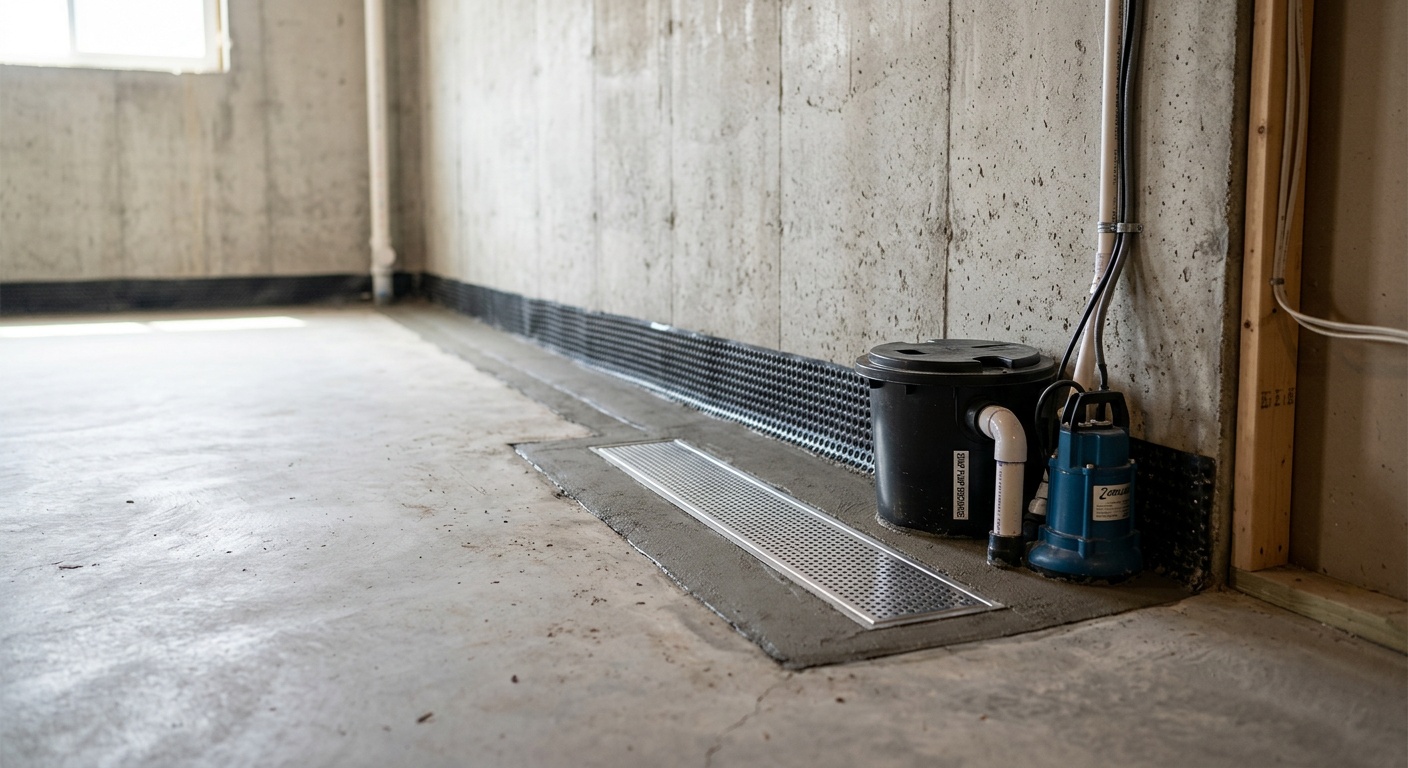
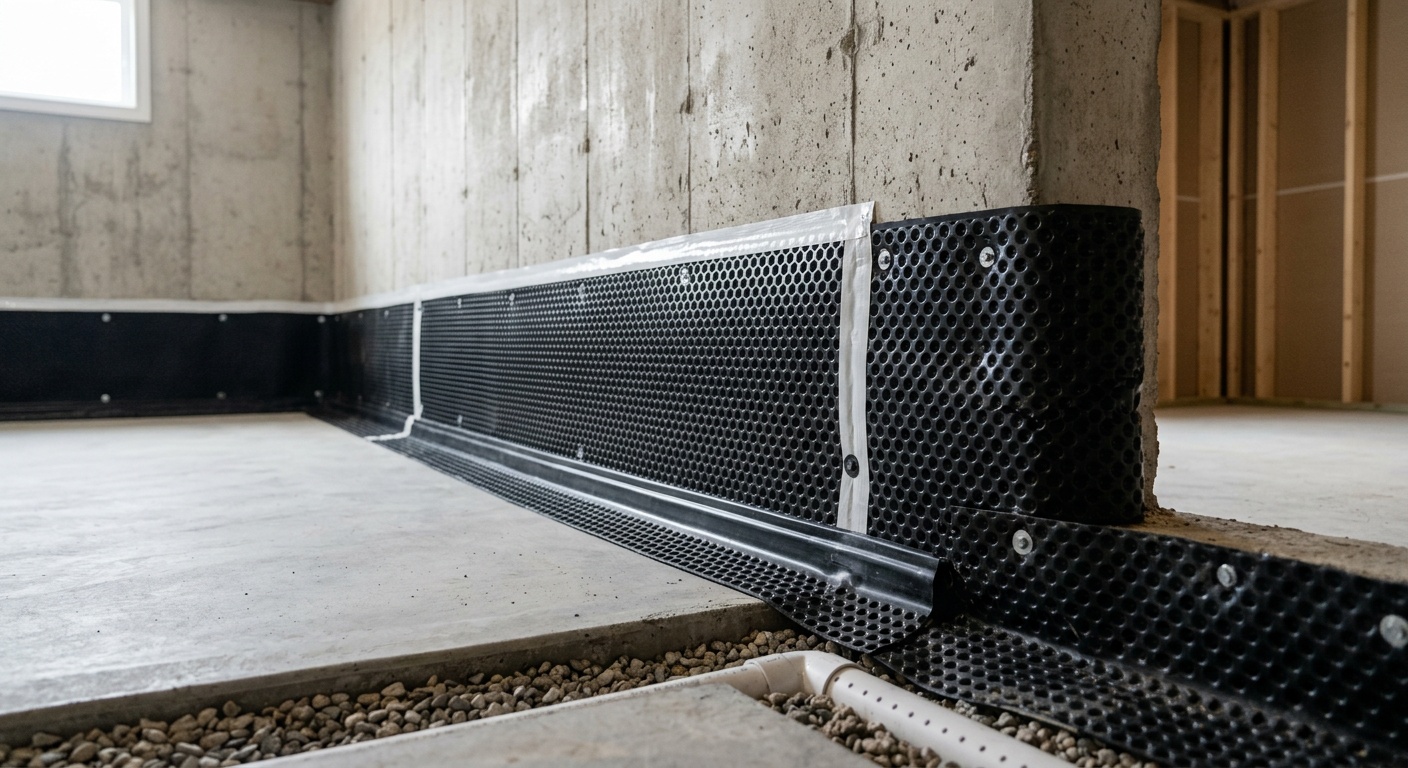
The most common interior waterproofing method is the installation of an interior drainage system combined with a sump pump. Contractors saw a channel along the perimeter of the basement floor, just inside the foundation wall. A perforated pipe is laid in this channel, and water that seeps through the walls or up through the floor is captured and directed to a sump pit. A sump pump then ejects this water away from the home.
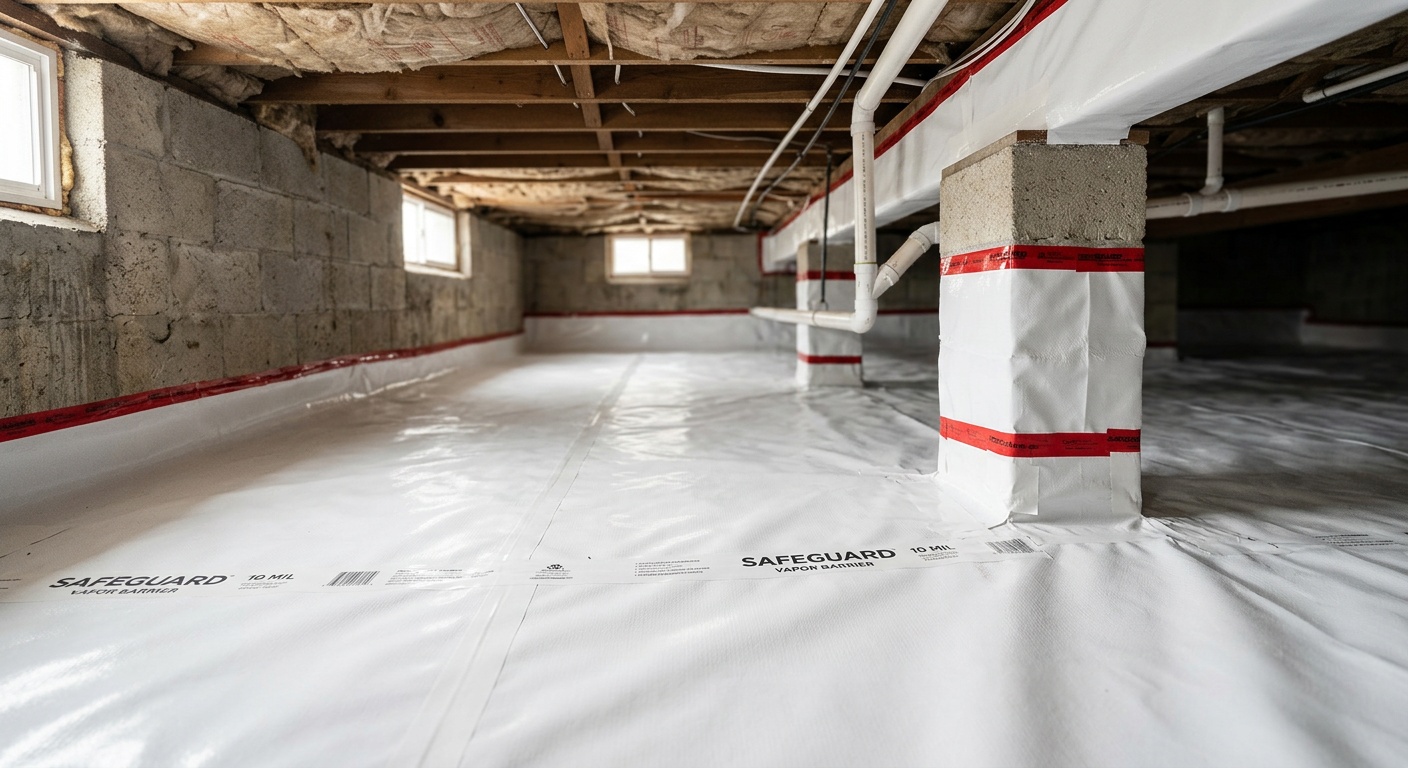
Interior systems are often paired with vapor barriers — thick polyethylene sheets applied to basement walls — and sometimes with waterproof wall panels or coatings that direct seeping water down into the drainage channel rather than allowing it to pool on the floor.
In 2026, smart sump pump technology has become mainstream. Systems from companies like Zoeller, Wayne, and Liberty Pumps now integrate with home automation platforms, sending real-time alerts to your smartphone if water levels rise, if the pump fails, or if a backup battery kicks in — giving homeowners unprecedented visibility and peace of mind.
The Advantages of Working Inside
- Cost-effective: Interior systems typically cost between $5,000 and $15,000 for an average home — significantly less than exterior methods.
- Weather-independent installation: Work happens indoors, so weather doesn’t delay the project.
- Faster installation: Most interior systems are installed in 1–3 days.
- Accessible for most homes: No excavation means no concerns about decks, landscaping, or utility lines.
- Effective for hydrostatic pressure from below: Interior drains excel at managing water that rises through the floor slab — something exterior systems alone can’t address.
The Limitations to Consider
- Doesn’t stop water at source: Water still penetrates the foundation; it’s just redirected before causing damage. Over time, this can continue to degrade mortar and foundation walls.
- Ongoing maintenance: Sump pumps require regular testing, and backup power systems are essential during storms when power outages are most likely.
- Disrupts interior space: Installation requires breaking up the concrete floor perimeter — a significant disruption to finished basements.
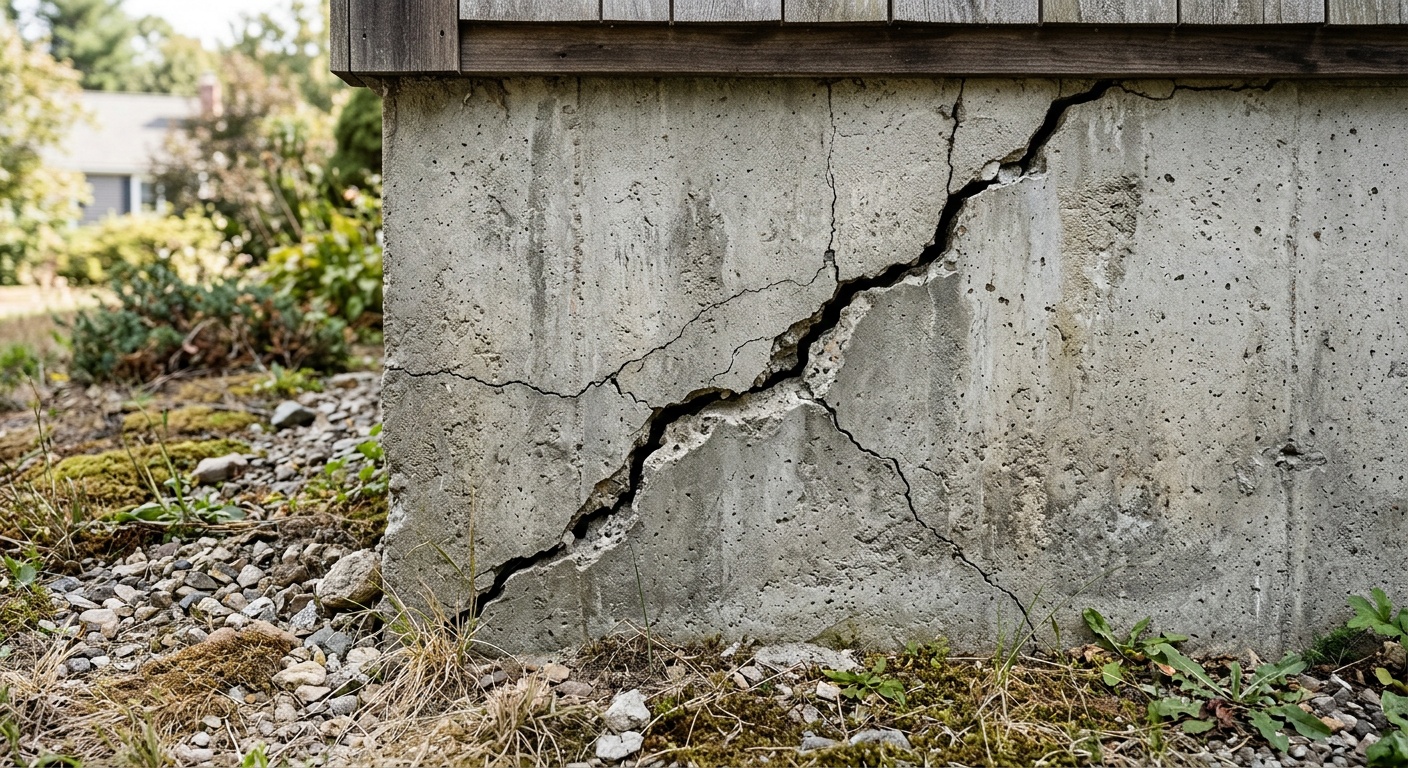
- Doesn’t address soil erosion or structural issues: If water intrusion is accompanied by foundation cracking or wall bowing, interior waterproofing alone is insufficient.
Head-to-Head Comparison
| Metric | Exterior Waterproofing | Interior Waterproofing |
|---|---|---|
| Average Cost (2026) | $15,000 – $30,000+ | $5,000 – $15,000 |
| Installation Time | 3–7 days | 1–3 days |
| Water Problem Addressed | Prevention (stops water at source) | Management (redirects water) |
| Typical Warranty | 15–25 years (membrane-dependent) | 10–15 years (transferable) |
| Best For | New construction, severe water intrusion, structural concerns | Existing homes, budget constraints, hydrostatic floor pressure |
Cost vs. Effectiveness: A Visual Comparison
The following chart compares four key performance dimensions for both waterproofing approaches, scored out of 100:
Long-Term Effectiveness
Cost Affordability
Installation Convenience
Structural Protection
Scores based on industry benchmarks and contractor surveys (2025–2026). ■ Exterior ■ Interior
Real-World Scenarios: Two Homeowners, Two Solutions
Case Study 1: The Murphy Family in Cleveland, Ohio
The Murphys purchased a 1960s-era colonial in suburban Cleveland in early 2024. By spring 2025, after two consecutive years of above-average rainfall, they noticed water seeping through the mortar joints of their poured concrete block foundation — and one wall was visibly beginning to bow inward under hydrostatic pressure.
Their contractor recommended a combination approach: exterior waterproofing on the two most affected walls (north and east-facing, where soil saturation was worst) combined with an interior drainage channel and sump pump system for the entire perimeter. The total cost came to approximately $22,500. The exterior membrane addressed the structural pressure and stopped active infiltration; the interior system handled residual seepage and floor moisture.
By 2026, the Murphys’ basement is fully finished as a recreational room. Their home appraiser noted the dual waterproofing system added an estimated $18,000 to $22,000 in market value — nearly a dollar-for-dollar return on their investment.
Case Study 2: Maria Chen in Portland, Oregon
Maria owns a 1980s ranch-style home in Portland, where the wet season consistently delivers heavy precipitation from October through April. Her basement had persistent floor dampness — not wall seepage — and a musty smell that was making the space unusable. A structural inspection confirmed her foundation walls were sound; the issue was groundwater rising through the concrete slab due to a high water table.
In her case, exterior waterproofing would have been both unnecessary and impractical — her backyard patio and mature landscaping made full-perimeter excavation cost-prohibitive. Instead, she invested in a premium interior drainage system with a battery-backup sump pump and a full wall vapor barrier. Total cost: $8,200.
The result? Within one full wet season, Maria’s basement was dry, the musty odor was eliminated, and she converted the space into a home office — something she’d wanted to do for years. Her approach was targeted, budget-conscious, and perfectly matched to her actual problem.
The lesson from both cases: the “best” solution isn’t universal — it’s the one that matches your specific water source, structural condition, and budget.
Common Challenges and How to Overcome Them
Challenge 1: Misidentifying the Water Source
The single most common and costly mistake homeowners make is investing in a waterproofing solution before properly diagnosing where the water is actually coming from. Wall seepage, floor moisture, condensation, and window well leaks each require different interventions. Misdiagnosis leads to wasted money and recurring problems.
Solution: Before committing to any contractor quote, request a thorough diagnostic inspection. A reputable waterproofing company will conduct a moisture meter test, examine your grading and gutters, inspect your sump pit (if you have one), and identify all potential entry points. In 2026, some advanced contractors use thermal imaging cameras to detect moisture behind walls without any demolition — a game-changing diagnostic tool worth asking about.
Challenge 2: Contractor Selection and Warranty Confusion
The waterproofing industry is unfortunately riddled with unscrupulous actors who offer lifetime warranties that disappear when the company goes out of business. According to consumer protection data compiled in 2025, basement waterproofing ranks among the top 10 categories for contractor complaints in most states.
Solution: Always verify that your contractor is a member of the Basement Health Association (BHA) or the National Waterproofing and Restoration Alliance (NWRA). Get at least three competing quotes. Ask specifically: Is the warranty transferable to future home buyers? Is it backed by a third-party insurance company? Avoid any contractor who pressures you into same-day signing or doesn’t offer a written, detailed scope of work.
Challenge 3: The “One Size Fits All” Contractor Pitch
Many waterproofing companies specialize exclusively in either interior OR exterior methods — and, predictably, they tend to recommend whatever they specialize in, regardless of whether it’s the optimal solution for your home. An interior-focused company will find reasons why exterior work isn’t necessary. An excavation company will paint alarming pictures of exterior foundation deterioration to justify their higher price point.
Solution: Seek at least one independent structural engineer’s opinion before committing. A structural engineer has no financial stake in which method you choose — they’ll give you an unbiased assessment of your foundation’s condition and the true nature of your water problem. At $200–$500 for a consultation, it’s one of the best investments you can make before spending thousands on waterproofing.
Frequently Asked Questions
Can I combine interior and exterior waterproofing, and is it worth the extra cost?
Absolutely — and for many homes with severe or multi-source water problems, a combined approach is the gold standard. Exterior waterproofing handles prevention and structural protection, while an interior drainage system manages any residual moisture and provides a safety net during extreme weather events. The Murphy family case study above illustrates this perfectly. If your budget allows and your home has both wall seepage and floor moisture, a dual system is worth the investment. Expect costs in the $20,000–$40,000 range for a comprehensive combined approach, but also expect industry-leading peace of mind and maximum protection.
How do I know if my basement water problem requires structural repairs before waterproofing?
Warning signs that suggest structural issues beyond waterproofing include: horizontal cracks in block or brick foundation walls (particularly concerning — these indicate lateral soil pressure), stair-step cracks in mortar joints, visible wall bowing or leaning (even slight), and wide vertical cracks (more than 1/4 inch). If you observe any of these, stop — do not proceed directly to waterproofing. Hire a licensed structural engineer first. Waterproofing over an unstable foundation is like painting over rust: it masks the problem temporarily while the underlying damage worsens. Structural repairs such as carbon fiber straps, wall anchors, or piering may be required before any waterproofing work begins.
Does basement waterproofing actually increase home resale value in 2026?
Yes, meaningfully so — particularly in markets where basement flooding or moisture is a known concern. A 2025 study by Remodeling Magazine found that basement waterproofing systems return an average of 30%–50% of their cost in added resale value, with higher returns in flood-prone regions. More importantly, an unresolved water problem can actively decrease your home’s value — or kill a sale entirely during the inspection phase. In 2026’s competitive real estate market, transferable waterproofing warranties are increasingly viewed as a selling point by buyers, particularly millennials and Gen Z buyers who are more likely to request detailed home inspection reports and prioritize move-in-ready, maintenance-reduced homes.
Your Waterproofing Roadmap: Next Steps That Actually Move the Needle
You’ve navigated the complexity — now let’s turn that knowledge into action. Here’s a practical, sequenced roadmap for making the right waterproofing decision for your specific home:
- Step 1 — Diagnose Before You Decide (Week 1): Walk your basement perimeter after the next rain event. Note exactly where moisture appears — walls, floor, corners, window wells. Take photos. This diagnostic data is invaluable when speaking with contractors.
- Step 2 — Get an Independent Structural Assessment (Week 2): Before calling waterproofing companies, invest in a structural engineer’s opinion if you have any visible cracking or wall distortion. This protects you from being sold an incomplete solution.
- Step 3 — Collect Three or More Quotes (Weeks 2–3): Get quotes from companies that specialize in both interior and exterior methods — not just one. Ask each contractor to specify what water source they’re addressing and why their recommended method is superior for your specific situation.
- Step 4 — Evaluate Warranties Critically (Week 3): Scrutinize warranty terms. Is it transferable? Is it insured by a third party? What voids the warranty? A great warranty on paper means nothing if the company won’t honor it.
- Step 5 — Act Before the Next Wet Season (Week 4+): Water damage is progressive. Every storm season without proper waterproofing compounds the problem and potentially the cost. Schedule work during dry months when contractor availability and ground conditions are optimal.
As climate patterns continue shifting and extreme precipitation events become more frequent through 2027 and beyond, basement waterproofing is transitioning from a reactive repair to a proactive home investment — much like roof replacement or HVAC maintenance. The homeowners who act strategically now will face far lower costs and disruption than those who wait for a crisis.
Here’s the question worth sitting with: What is the cost of not waterproofing your basement — in repair bills, health impacts, lost living space, and reduced home value — compared to the cost of addressing it properly today? The answer, for most homeowners, makes the decision remarkably clear.
Your basement doesn’t have to be a liability. With the right information and the right contractor, it can be one of the most valuable, livable spaces in your home — starting with keeping it dry.