Home Renovation Loans for Basement Waterproofing: What Every Homeowner Needs to Know in 2026
Reading time: 14 minutes
Water creeping into your basement isn’t just an inconvenience — it’s a ticking financial time bomb. In 2026, basement water damage remains one of the top three causes of significant home value loss, with the average remediation cost sitting between $8,500 and $32,000 depending on severity and foundation type. That’s not a bill most homeowners can cover out of pocket. So, what’s the smart move? Securing the right renovation loan before that damp corner becomes a flooded disaster zone.
Here’s the straight talk: financing basement waterproofing isn’t as complicated as lenders sometimes make it seem — but you do need to know where to look, what to ask, and which loan product actually matches your situation. Whether you’re a first-time homeowner dealing with seasonal seepage or a long-time property owner facing foundation cracks, this guide will walk you through the entire financing landscape with clarity and precision.
Table of Contents
- Why Basement Waterproofing Can’t Wait
- Types of Home Renovation Loans for Waterproofing
- Loan Comparison: Side-by-Side Breakdown
- How to Qualify: Credit, Equity, and Documentation
- Real Scenarios: What Other Homeowners Did
- Cost vs. Loan Coverage: Data Snapshot
- Common Challenges and How to Overcome Them
- Actionable Tips Before You Apply
- Frequently Asked Questions
- Your Dry Basement Roadmap: Next Steps
Why Basement Waterproofing Can’t Wait
Let’s start with an uncomfortable truth. A 2025 report by the National Association of Home Inspectors revealed that approximately 60% of U.S. homes with basements experience some form of water intrusion. More strikingly, homes that delay waterproofing repairs for more than 18 months see an average 12–18% reduction in resale value. That’s equity disappearing while you procrastinate.
Basement water damage doesn’t stay in the basement. It migrates. Mold colonies — which can begin forming within 24 to 48 hours of moisture exposure — spread into floor joists, walls, and HVAC systems. The Environmental Protection Agency (EPA) noted in its 2025 Indoor Air Quality update that homes with persistent basement moisture have 2.3 times higher instances of respiratory issues among occupants. This is a health issue as much as it is a financial one.
And from a purely financial standpoint, waiting doesn’t save money — it multiplies costs. A $3,000 crack injection repair in 2026 could become a $22,000 interior drain tile system installation if ignored for two more years. The math is brutal, and it argues strongly for acting now and financing strategically rather than delaying and paying more later.
The Hidden Equity Argument for Acting Fast
Here’s a reframe that changes how many homeowners approach this decision: waterproofing isn’t an expense — it’s an investment in protected equity. According to Remodeling Magazine’s 2026 Cost vs. Value Report, basement waterproofing returns approximately $0.78 on every dollar spent in improved home value at resale. Combined with the prevention of significantly larger future damage, the return on investment becomes even more compelling. Financing the fix today — even with interest — often beats the cost of structural deterioration.
Types of Home Renovation Loans for Basement Waterproofing
Not all renovation loans are created equal, and the differences between them matter enormously when you’re dealing with a project that has both urgent and structural components. Here’s a clear breakdown of your primary options in 2026.
Home Equity Loans and HELOCs
If you’ve built meaningful equity in your home, a Home Equity Loan or a Home Equity Line of Credit (HELOC) is often the most cost-effective financing route for basement waterproofing. In 2026, average HELOC interest rates hover between 7.1% and 9.4% depending on your credit profile and lender, following the Federal Reserve’s measured rate adjustments throughout 2025.
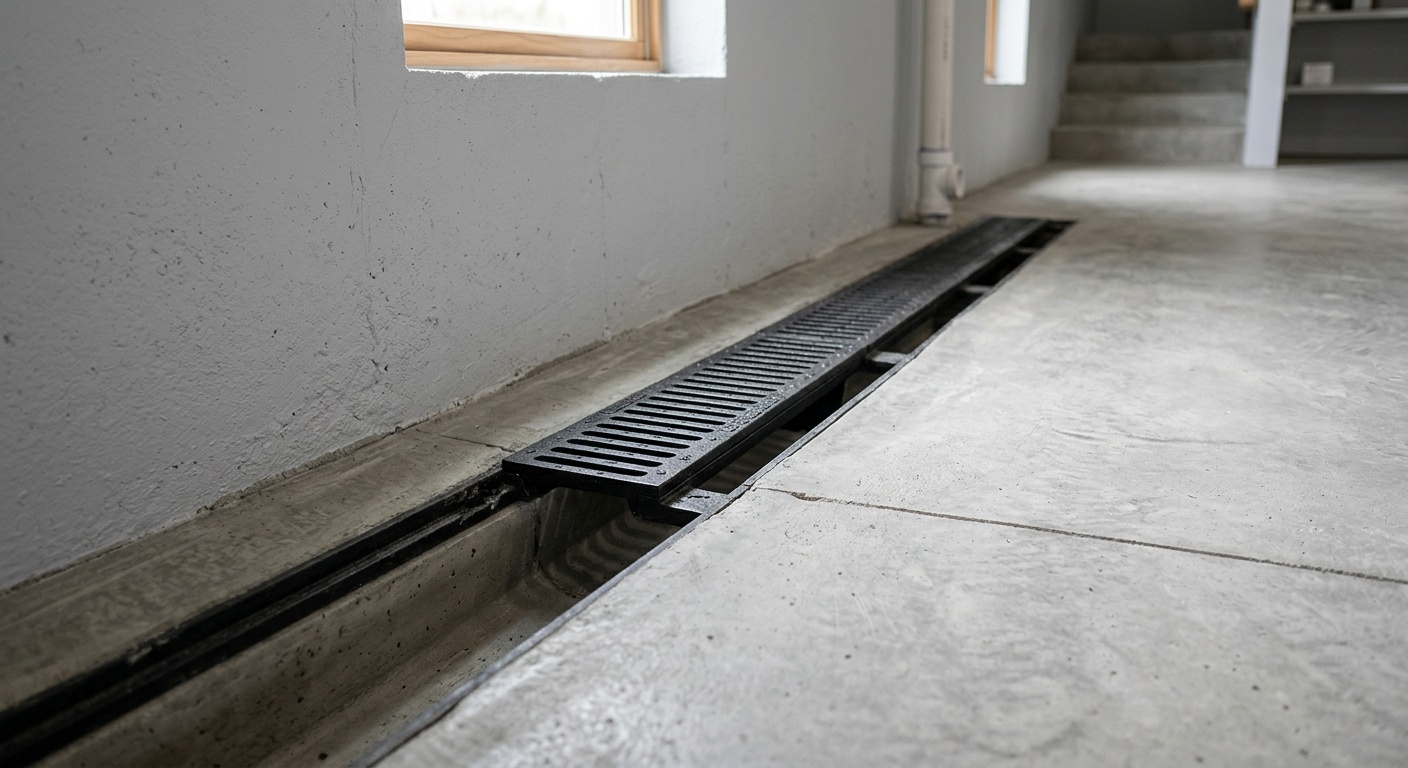
A home equity loan gives you a lump sum with a fixed interest rate — ideal if your waterproofing contractor has provided a clear, comprehensive quote. A HELOC, on the other hand, works more like a credit card with a draw period, which is useful if your project will unfold in phases (for example, interior drainage installation now, exterior waterproofing membrane next spring).
Pros:
- Lower interest rates compared to personal loans
- Potential tax deductibility on interest (consult your tax advisor)
- Flexible draw periods with HELOCs
- Larger borrowing limits based on home equity
Cons:
- Your home is used as collateral
- Requires sufficient equity (most lenders want at least 15–20%)
- Longer approval process (typically 3–6 weeks in 2026)
FHA Title I Property Improvement Loans
For homeowners who don’t have substantial equity, the FHA Title I loan is a government-backed option specifically designed for property improvements. In 2026, Title I loans allow borrowing up to $25,000 for single-family homes without requiring equity or home appraisal for amounts under $7,500. This makes them particularly accessible for newer homeowners or those in markets where values haven’t risen dramatically.
The FHA Title I program requires working with an approved lender, and the waterproofing project must be classified as a permanent improvement — which it typically is. Interest rates are set by individual lenders but are generally competitive, ranging from 6.5% to 10% in the current market.
Personal Home Improvement Loans
Unsecured personal loans from banks, credit unions, and online lenders represent the fastest path to funding but come at a higher interest cost. In 2026, personal loan rates for home improvement purposes range from 8.5% to 24% depending on creditworthiness. Approval can happen in as little as 24–72 hours, making these loans a viable option when you’re dealing with an active water emergency.
Online lenders like SoFi, LightStream, and Marcus by Goldman Sachs have streamlined the application process significantly, and LightStream in particular offers a specialized home improvement loan category with competitive rates for borrowers with strong credit scores (720+).
Contractor Financing Programs
Many basement waterproofing companies — including regional specialists and national chains like Basement Systems and U.S. Waterproofing — offer in-house or third-party financing arrangements. These can include promotional 0% interest periods (typically 12–18 months) for qualified buyers. However, read the fine print carefully: deferred interest programs can become expensive if the full balance isn’t paid within the promotional window.
Cash-Out Refinancing
In a 2026 mortgage environment where many homeowners locked in rates below 4% during 2020–2022, cash-out refinancing is generally not the preferred route for most people. Refinancing your entire mortgage at today’s rates (averaging 6.3–6.8%) to extract equity for a $15,000 waterproofing project rarely pencils out. However, for homeowners who purchased recently at higher rates and whose property values have risen substantially, it can make sense in specific circumstances.
Loan Comparison: Side-by-Side Breakdown
| Loan Type | Avg. Rate (2026) | Max Amount | Approval Speed | Collateral Required |
|---|---|---|---|---|
| Home Equity Loan | 7.1% – 8.9% | Up to 85% of equity | 3–6 weeks | Yes (home) |
| HELOC | 7.4% – 9.4% | Up to 85% of equity | 3–6 weeks | Yes (home) |
| FHA Title I Loan | 6.5% – 10% | Up to $25,000 | 2–4 weeks | No (under $7,500) |
| Personal Improvement Loan | 8.5% – 24% | $5,000 – $100,000 | 24–72 hours | No |
| Contractor Financing | 0% promo / 19–29% after | Varies by contractor | Same day–1 week | No |
How to Qualify: Credit, Equity, and Documentation
Understanding what lenders are looking for in 2026 helps you approach the application strategically rather than reactively. Here are the three primary qualification factors and how to position yourself for success.
Credit Score Thresholds by Loan Type
Your credit score is the first filter every lender applies. Here’s what to expect across loan categories in 2026:
- Home Equity Loan / HELOC: Minimum 620, preferred 700+
- FHA Title I: No official minimum, but most approved lenders want 580+
- Personal Improvement Loan: 580–640 minimum, best rates at 720+
- Contractor Financing (third-party): Typically 600+
If your score falls below these thresholds, consider spending 3–6 months reducing credit utilization (below 30% is the target) and disputing any inaccurate negative items before applying. A 30-point score improvement can meaningfully reduce your interest rate and expand your financing options.
Debt-to-Income Ratio: The Often-Overlooked Factor
Lenders in 2026 are particularly attentive to debt-to-income (DTI) ratios. Most require a DTI below 43% for equity-based loans, and some online personal loan lenders prefer below 36%. To calculate yours: divide your total monthly debt payments by your gross monthly income. If you’re at 45% DTI, paying down a car loan or credit card before applying can shift your qualification status meaningfully.
Documentation Checklist
Have these documents ready before applying for any home renovation loan in 2026:
- Last two years of federal tax returns
- Recent pay stubs (last 30 days) or proof of self-employment income
- Most recent mortgage statement (for equity-based loans)
- Contractor estimate or bid (detailed line-item, not a ballpark)
- Recent home appraisal or tax assessment (for equity-based products)
- Homeowner’s insurance declarations page
- Photo documentation of current water damage
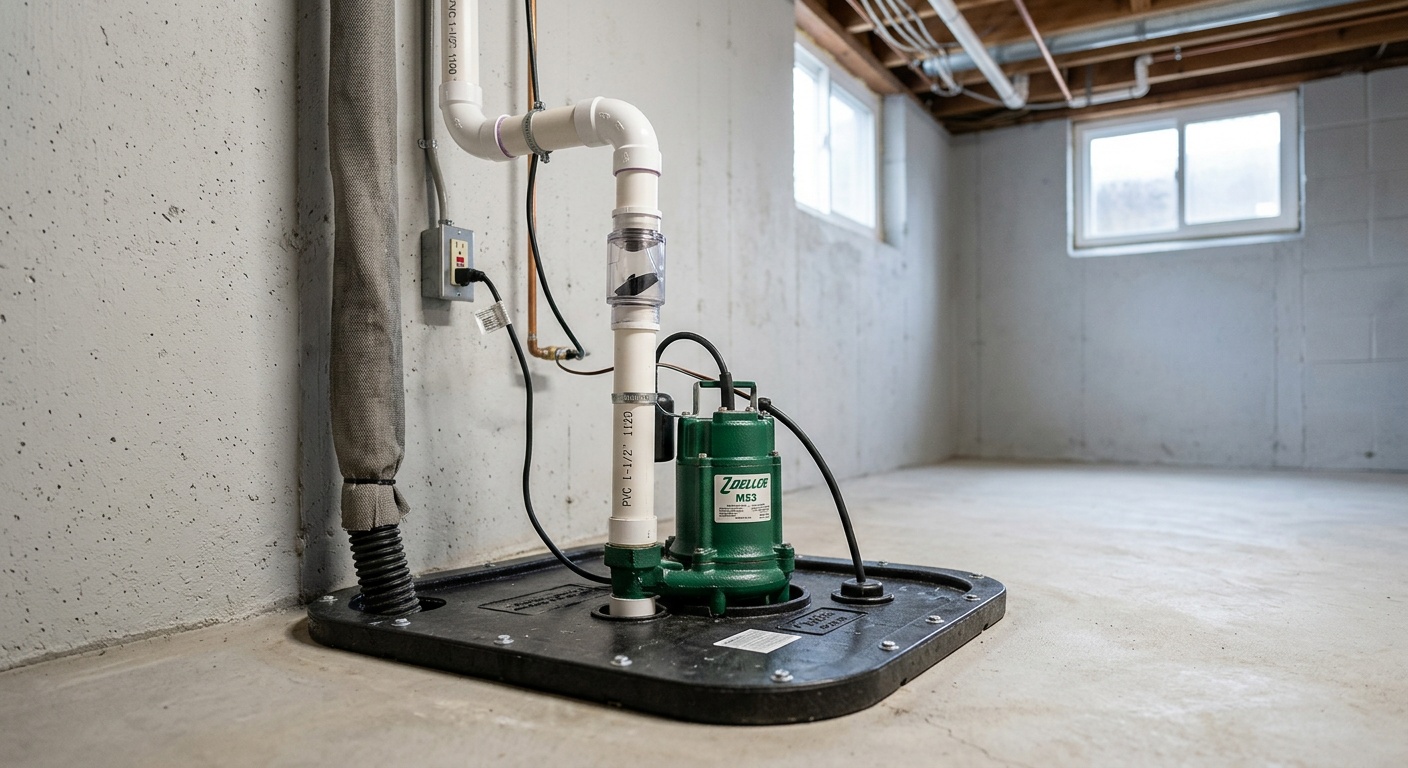
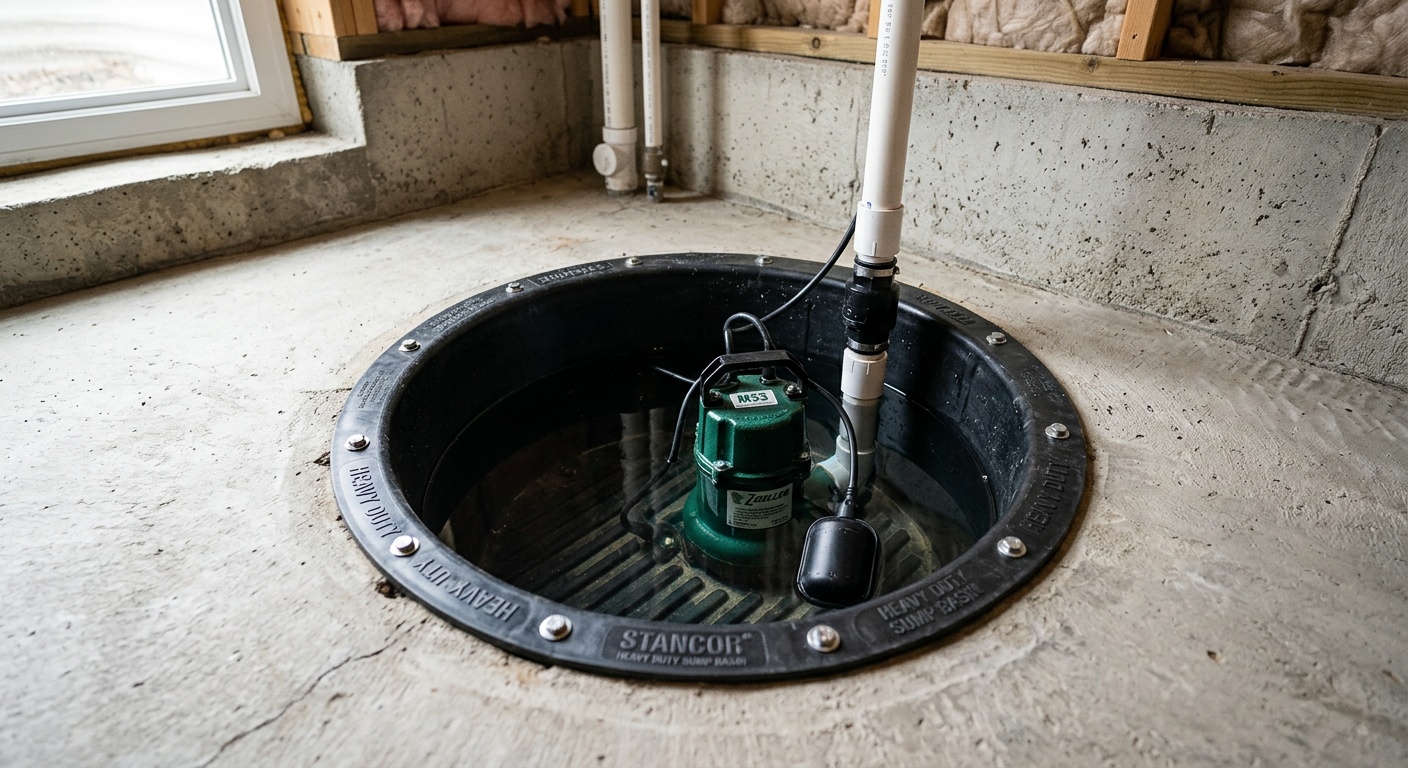
That last item — photo documentation — is increasingly requested by lenders who want to confirm the legitimacy of the improvement project. Take timestamped photos of visible water damage, efflorescence on walls, sump pump issues, and any structural concerns before your contractor visit.
Real Scenarios: What Other Homeowners Did
Scenario 1: The Chicago Split-Level with Seasonal Flooding
Marcus and Elena, owners of a 1978 split-level home in the Chicago suburbs, discovered significant water intrusion in their lower level during the spring 2025 thaw. Two waterproofing contractors quoted the interior drain tile system installation at $18,400 and $21,200 respectively. With only $42,000 in remaining equity (after a refinance in 2022) and a credit score of 691, they pursued a home equity loan for $20,000 at a fixed rate of 8.2% over 10 years. Their monthly payment came to approximately $245 — manageable against their household income. They locked in the lower contractor quote, added a battery backup sump system for $1,600, and came in $200 under their loan amount. The key lesson: getting multiple contractor quotes saved them nearly $3,000 and kept them within their approved loan ceiling.
Scenario 2: The First-Time Buyer with No Equity
Priya purchased a townhome in Charlotte, NC in late 2024 and discovered basement seepage within her first spring. With less than a year of ownership and almost no equity built up, she couldn’t access home equity products. Her credit score was 712. She used an FHA Title I loan for $11,500 — covering both interior waterproofing membrane application and grading improvements around her foundation — at 7.8% over seven years. Her monthly payment was $178. Because she acted in 2026 before the damage worsened, she avoided what her inspector estimated could have become a $35,000 structural problem within three years.
Scenario 3: The Emergency Situation
When a pipe burst near the foundation of James’s 1960s Cape Cod in Providence, Rhode Island, creating immediate flooding, he needed a contractor within 48 hours and financing equally fast. He opted for a personal improvement loan through LightStream at 10.4% (his credit score was 748) for $9,800 over 5 years. Approval came in under 12 hours. While his rate was higher than a home equity product, the speed was non-negotiable given active water damage. He later refinanced the remaining balance into a HELOC six months later once his home equity paperwork was processed — effectively lowering his ongoing rate. This two-step approach is worth knowing about for emergency situations.
Cost vs. Loan Coverage: Data Snapshot
The chart below illustrates the average basement waterproofing costs by project type compared to typical loan coverage available in 2026. This helps you match financing scope to actual project needs.
Basement Waterproofing: Project Cost vs. Avg. Loan Coverage (2026)
$1,200–$3,500
$8,000–$22,000
$15,000–$32,000
$1,800–$5,500
$20,000–$45,000
Bar width represents relative cost scale. Source: HomeAdvisor 2026 Cost Data & National Waterproofing Contractors Association.
Common Challenges and How to Overcome Them
Challenge 1: Getting Denied Due to Insufficient Equity
Many homeowners discover they don’t have enough equity to qualify for home equity products — especially those who purchased in 2022–2023 when prices were high and rates were rising, creating limited appreciation room. If this is your situation, don’t despair. The FHA Title I program exists precisely for this scenario. Additionally, some credit unions — particularly community-based ones — offer unsecured home improvement loans with more favorable terms than online lenders. Membership requirements are usually minimal (a small deposit), and credit unions approved 14% more improvement loan applications in 2025 than traditional banks, according to the Credit Union National Association.
Challenge 2: Contractor Quotes That Exceed Loan Limits
What happens when your waterproofing quote comes in at $28,000 but your FHA Title I loan tops out at $25,000? First, explore whether the project can be meaningfully phased — addressing the most critical elements now and deferring cosmetic or supplementary components. Second, combine financing sources: a Title I loan for the core work and a smaller personal loan or contractor financing for the remainder. Third, challenge the quote itself. In 2026, the availability of AI-powered home improvement estimating tools means you can benchmark contractor quotes with greater precision before negotiating.
Challenge 3: Insurance Gaps and Misunderstandings
A frustrating reality: standard homeowner’s insurance policies almost universally exclude gradual water intrusion and basement seepage from coverage. Many homeowners discover this after the fact and assume insurance will absorb the cost. The only exceptions are sudden, accidental events (like the pipe burst in James’s scenario above). In 2026, separate water backup and sump pump failure riders are available from most major insurers for $50–$150 annually — a smart proactive addition. Understanding this gap clearly means you’ll plan your financing accordingly rather than waiting fruitlessly for an insurance payout that won’t come.
Actionable Tips Before You Apply
Ready to move forward? Here are six concrete steps to maximize your financing success:
- Get three detailed quotes. Not ballpark estimates — itemized, written quotes from licensed waterproofing contractors. This documentation strengthens your loan application and gives you negotiating leverage.
- Check your credit report 60 days in advance. Use AnnualCreditReport.com to pull all three bureau reports. Dispute any errors, which take 30–45 days to resolve. Even a 15-point score improvement can change your rate tier.
- Calculate your loan-to-value ratio. Use your home’s current market value (get a free CMA from a local realtor or use Zillow’s 2026 Zestimate with caution) and subtract your mortgage balance. This tells you what equity-based products are accessible.
- Prequalify with multiple lenders. Soft credit checks during prequalification don’t impact your score. Compare APR (not just interest rate), origination fees, and prepayment penalties across at least three lenders.
- Time your application strategically. If you have seasonal flooding, don’t wait until spring to apply. The financing process takes 2–6 weeks; start in winter so funding is ready before the thaw season arrives.
- Understand what “home improvement” means to lenders. The project must be classified as a permanent structural improvement. Ensure your contractor’s documentation uses language like “waterproofing system installation” rather than vague terms like “basement cleanup.”
Frequently Asked Questions
Can I use a personal loan for basement waterproofing if I have bad credit?
Yes, but your options narrow considerably and rates climb steeply. In 2026, lenders like Avant and Upgrade offer personal loans to borrowers with credit scores in the 580–619 range, though rates may reach 24–35%. If your score is below 580, consider a co-signer arrangement, secured loan using a savings account as collateral, or a credit union that evaluates membership relationships alongside credit scores. Another option is a contractor financing plan with deferred payment terms, though these carry risk if you can’t clear the balance within the promotional window. Improving your credit score even modestly — by 40–50 points — before applying can save thousands in interest over a multi-year loan term.
Is the interest on a home renovation loan for waterproofing tax deductible?
For home equity loans and HELOCs used specifically for home improvement (which waterproofing qualifies as), the interest may be deductible under IRS guidelines — but only if the loan is secured by your home and you itemize deductions rather than taking the standard deduction. Under current 2026 tax law (an extension of the Tax Cuts and Jobs Act framework), the deduction applies to interest on up to $750,000 of combined home loan debt. Personal loans and FHA Title I loans generally do not qualify for the home mortgage interest deduction. Always consult a qualified tax professional for guidance specific to your situation, as tax laws can shift and individual circumstances vary significantly.
Will basement waterproofing increase my home’s appraised value enough to cover loan costs?
Waterproofing typically doesn’t produce a dollar-for-dollar return in appraised value — most estimates suggest a 75–80 cent return on each dollar invested in market value terms. However, this framing misses the bigger financial picture. A home with documented water issues can struggle to sell or receive financing from buyers’ mortgage lenders — some lenders won’t approve mortgages on homes with active water damage reports. Additionally, waterproofing prevents cascading damage that would cost dramatically more to remediate. The real ROI calculation must include: protected existing value, avoided future repair costs, marketability at resale, and potential insurance savings from reduced risk. When viewed holistically, the case for waterproofing — and financing it intelligently — is very strong in virtually every scenario.
Your Dry Basement Roadmap: Next Steps That Matter
You’ve absorbed a lot — and the right response to that knowledge is action, not overwhelm. Here’s your concrete five-step roadmap to move from “damp basement worry” to “fully financed, professionally waterproofed peace of mind” in 2026:
- Assess the damage severity this week. Schedule a free inspection with two to three licensed waterproofing contractors. Most offer complimentary evaluations. Document everything with photos.
- Pull your credit report and calculate your equity position. These two numbers define your financing landscape. Know them before talking to any lender.
- Match your financing tool to your situation. Use the comparison table in this article as your decision framework. Equity available + good credit = home equity loan. No equity + decent credit = FHA Title I. Emergency + strong credit = personal loan. Mix and match for larger projects.
- Prequalify with at least three lenders before committing. Never accept the first offer. In 2026’s competitive lending market, comparison shopping typically saves homeowners $1,200–$3,800 in total interest costs over a five-year loan term.
- Lock in your contractor and timeline. Once financing is confirmed, move quickly. Reputable waterproofing contractors in many markets have 4–8 week lead times in 2026, particularly heading into spring moisture season.
As climate patterns continue delivering more intense precipitation events across North America — with 2025 setting records for flash flooding in 23 U.S. states — basement waterproofing is transitioning from a reactive repair into a proactive home resilience strategy. Forward-thinking homeowners in 2026 aren’t waiting for the flood; they’re financing the protection before it’s needed.
Your home is almost certainly your largest financial asset. The question isn’t really whether you can afford to waterproof your basement — it’s whether you can afford not to. With the right loan product, smart preparation, and a clear-eyed understanding of your options, you’re fully equipped to make that investment confidently. What’s the first step you’ll take this week to protect what you’ve built?